🏺 Destrnik heritage

Roots of the valley

Beneath the hills of Slovenske gorice lie almost two thousand years of stories — from Roman burial mounds to flax, wine and bricks. This is where Lunina dolina grows today.

Illustration of the Slovenske gorice hills with a church, vineyards, woods with burial mounds and flowering flax
~2000 years of stories, from Roman burial mounds to today
6 villages with burial mound cemeteries in the woods
1518 the present Church of St Urban is built
1849 the municipality of Sveti Urban is founded

Lunina dolina lies in the municipality of Destrnik, a few kilometres north of Ptuj — the town considered the oldest in Slovenia. People lived in these hills, ploughed, planted and buried their loved ones as early as Roman times. Their traces remain: in the woods, in village names, in old tools and in customs our grandparents still knew.

⏳ Through time

The story of the place in eight steps

  1. Before the Romans

    Celtic coins are said to have been found in Gomila, and a stone axe in Placar. People lived here long before the Romans.

  2. 1st–2nd century

    The area is part of the Roman province of Pannonia. A Roman road leads towards Poetovio, and burial mounds — the graves of local people — appear in the hills.

  3. 169

    The Marcomanni invade. Finds from later centuries are rare in Slovenske gorice, so archaeologists assume the campaign laid the land waste.

  4. 1518

    The present Church of St Urban is built and extended in 1768. A chapel at St Urban is said to have been mentioned as early as 1100.

  5. 1765

    The rules of the Ptuj weavers' guild also apply to the parish of Sv. Urban: a rural weaver may own no more than three looms.

  6. 1849

    The municipality of Sveti Urban is founded — with almost the same boundaries as today's municipality of Destrnik.

  7. 1928

    A brickworks opens in Janežovci. Smallholders and cottagers find seasonal work there.

  8. 2023

    We begin work in Lunina dolina — and discover with curiosity everything this land went through before us.

Our Roman neighbour

Poetovio — the town on the Drava

Where Ptuj stands today, there was a Roman legionary camp in the 1st century. The Legio VIII Augusta was stationed here first, and from 45 or 46 the Legio XIII Gemina. Under Emperor Trajan the settlement became a colony — Colonia Ulpia Traiana Poetovio — and one of the more important towns in this part of the empire.

The town also worshipped the god Mithras; you can still visit the remains of his sanctuaries today. A Roman road ran past present-day Destrnik, linking the lands to the north and east with Italy and Poetovio.

Secret of the woods

Burial mounds — Roman graves beneath the trees

A burial mound is a round heap of earth over a grave. In the 1st and 2nd centuries local people cremated their dead and buried the ashes, together with vessels and personal belongings, under the mound. Archaeologists call them Norico-Pannonian tumuli.

Burial mounds survive in the woods near Gomilci, Gomila, Zgornji Velovlek, Drstelja, Placar and Janežovci. The village names Gomila and Gomilci (gomila means burial mound) are probably no coincidence.

earth mound ashes and vessels original ground

🔍 The woman's grave from Gomilci

In 1962 archaeologists excavated one of three mounds near Gomilci. It held the cremation grave of a woman from the early 2nd century: on the ashes stood six mostly intact vessels — a jug, a pot, a cup and three plates — together with part of a bronze brooch (fibula). The finds are kept by the Ptuj–Ormož Regional Museum.

✋ Please: do not dig

Many mounds have already been dug up by treasure hunters who took the finds without recording where they came from — and with that, part of the story is lost. Most burial mound cemeteries in the municipality are protected cultural heritage. If you find something, please inform the Ptuj–Ormož Regional Museum.

🌾 Life in the past

How our ancestors made a living

In 1937 the municipality of Sveti Urban had 2,691 inhabitants and 673 houses. People lived from their fields, livestock, orchards and vineyards — and from the work of their hands.

From flax to linen

Almost every larger farm in Slovenske gorice had its own flax barn — a wooden shed set apart from the house because of the fire risk, where flax and hemp were dried. Flax for oil was sown in September, flax for yarn in March and April.

In autumn the golden stalks were pulled up by the roots, spread out in the dew, dried, broken with a flax brake and combed with heckles. In winter the women spun together, and girls from Slovenske gorice also went to Međimurje to work as spinners.

Wine and wine presses

In the vineyards stood presses — small buildings with a cellar below and a wine press, tool room and small parlour above. In 1937 the municipality had 122 ha of vineyards. After phylloxera they were replanted with mostly white varieties, while on lower ground the hybrid Šmarnica grape was grown until the 1960s.

The grape harvest was a great celebration. When the must in the barrels began to ferment and bubble, people said the must was talking. St Urban, patron of the parish and of winegrowers, has his feast day on 25 May — still the municipal holiday today.

Orchards and the Ptuj market

In 1937 orchards covered 308 ha — more than twice the area of the vineyards. Fine apple varieties were grown most.

Local people sold livestock, fruit, wine, dairy products and firewood at the market in Ptuj. So Ptuj was always close — even for those who lived off the land.

Clay and bricks

The local earth is not suitable for pottery, so vessels came from Ptuj. In the Rogoznica valley near Janežovci, however, there is clay that is good for bricks.

A brickworks opened here in 1928, and in 1948 it became the District Brickworks Janežovci. Production later stopped, but the abandoned clay pits remain.

Flax or clay?

Both — but each in its own way. Flax was part of everyday life on almost every farm, from field to linen. Clay, on the other hand, was only good for bricks: the fine Roman vessels from the burial mounds came from the workshops of Poetovio.

📍 Places to visit

Heritage you can visit

In Destrnik

  • Wine press and flax barn

    In the centre of Destrnik stand an old wine press and a flax barn displaying the tools used to process flax — from the flax brake to the heckles.

  • Church of St Urban

    Built in 1518 and extended in 1768. Today it is a cultural monument of national importance.

  • Snake's head fritillary by the Pesnica

    In spring the snake's head fritillary, also called the marsh tulip, flowers in the meadows by the Pesnica river.

Nearby

  • Ptuj

    The oldest town in Slovenia: the castle with the Ptuj–Ormož Regional Museum, Roman monuments and Mithraic sanctuaries.

  • Kurentovanje

    Carnival season around Ptuj. The door-to-door rounds of the Kurenti have been on UNESCO's list of the Intangible Cultural Heritage of Humanity since 2017.

  • Ptujska Gora

    A Gothic pilgrimage church with the famous relief of the Virgin of Mercy sheltering people under her cloak.

The story continues

Lunina dolina — a new chapter on old land

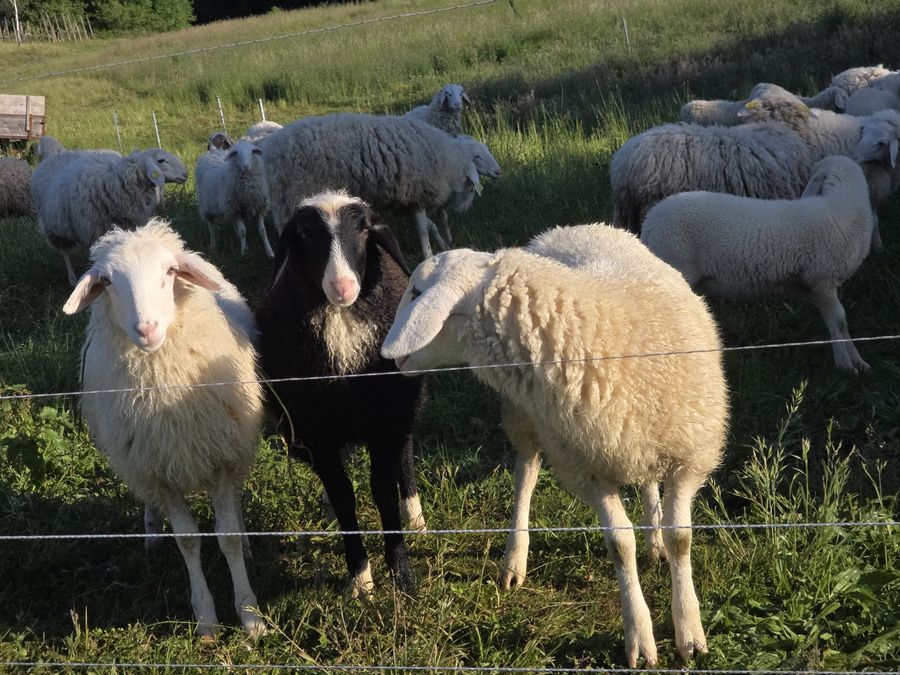
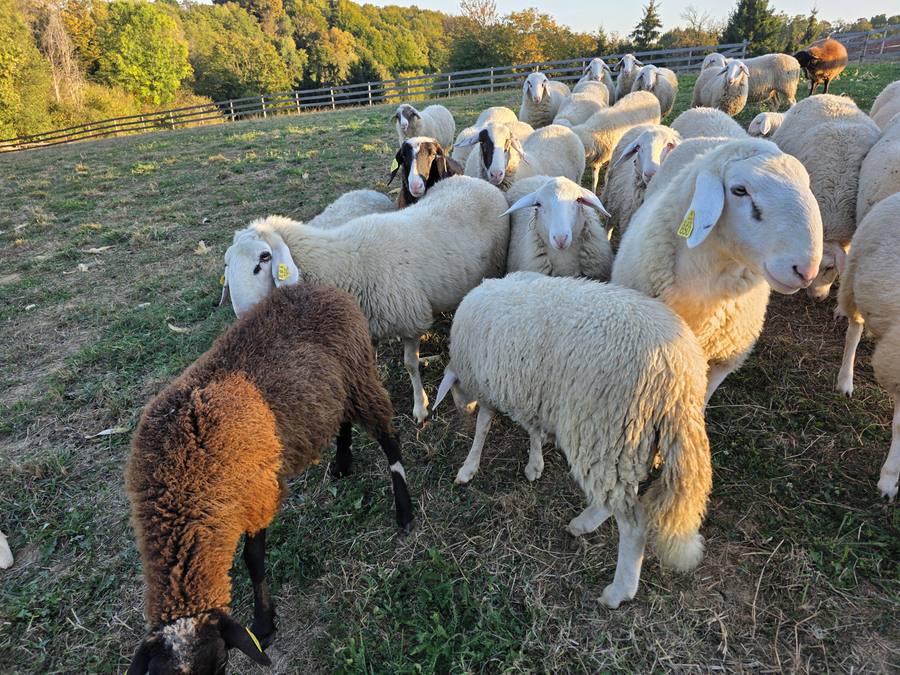
On land our ancestors worked for centuries, we now restore the soil, plant trees and keep native breeds. Come on a guided visit and see how the story carries on.

Frequently asked questions

What are the burial mounds near Destrnik?

Round earth mounds over cremation graves from the Roman period, mostly from the 1st and 2nd centuries. They survive in the woods near six villages in the municipality of Destrnik; most of the burial mound cemeteries are protected cultural heritage.

Was flax grown in Destrnik?

Yes. Almost every larger farm in Slovenske gorice had a flax barn for drying flax and hemp. In the centre of Destrnik you can visit an old flax barn with tools for processing flax.

Was there clay for pottery around Destrnik?

No. The local clay is not suitable for pottery, so vessels came from the workshops of Poetovio (Ptuj). The clay in the Rogoznica valley near Janežovci was used for bricks from 1928 onwards.

This site uses Google Analytics to measure visits. By continuing to use the site, you agree to this.